
Machine Consciousness is Inevitable

Can a robot become self-conscious? It looks like an interesting question, but it is not: machine consciousness is just inevitable. The true interesting questions are hidden in the details of how such consciousness will emerge and how it will look like.
The Trolley Cart Problem is not an AI problem

Every time there is a discussion on the future of AI-powered Autonomous Vehicles, somebody put the Trolley Cart Problem (TCP) on the table. And every time this happens, I am annoyed. However, recently, I saw some mutual followers studying AI and Computer Science talking about how TCP is a fundamental problem for the future of AI and autonomous vehicles. So I think it is time to speak it loud: the Trolley Cart Problem is not an AI problem! Let’s see why.
Overview of Three Techniques for Procedural Storytelling

Inspired by a recent paper I read this week, I decided to explain the three major “classic solutions” to the generative storytelling problem: Simulation, Planning, and Context-Free Grammars. Let’s what they are and what to choose.
Marginalia: Rebooting AI by Gary Marcus and Ernest Davis
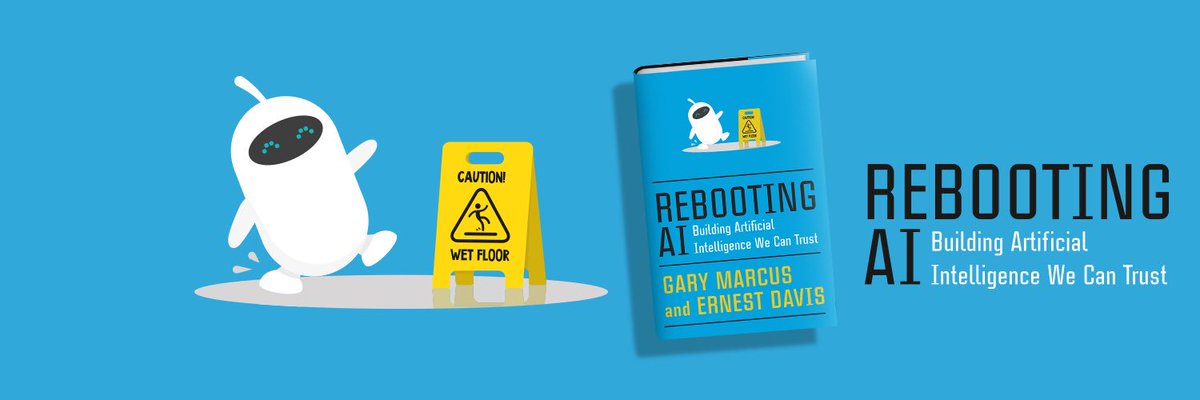
With this new year, let’s try a new format. Marginalia will be a series in which I’ll share notes and comments on interesting books I read. The name is directly inspired by the old word indicating the small notes on the margins of books.
It will be a chance to discuss my readings without the need to write a full-fledged article. I hope it will be interesting as a review of the book or as a discussion starter. So, let’s start.
Artificial Anxiety and the problem "Mental Issues" in AI
Anxiety is a human mind bug. This may seem a strange claim, but I cannot find a better explanation for anxiety disorders. In fact, we can see pathological anxiety as the undesired consequence of our ability to think about the future. Being scared about a life-threatening event in the near future is a valuable ability: it helps us to survive, avoid danger and, in short, make our species survive. That is one of the reason our species has been so successful in nature.
When cheating with a robot is really cheating?
This question is not new, at all! For several decades sci-fi writers, philosopher, AI and robotics researcher and many others have asked this question. Obviously, not in this form.
The politically correct forms for this question are: “When a robot is self-aware?”, “Can a machine have a soul?” or “Can a machine have emotions?”. However, I think the version in this article title will be the first one to be relevant for the general population. All these questions share the same goal: they try to identify what may make a machine a “human”. There are qualities such self-awareness, the ability to feel emotions, the “soul”, that we consider our exclusive. But as the research does its job and machines become more “intelligent”, we see this belief challenged and it is natural to ask ourselves after which point we have to consider a machine alive.