
I always say that September is the new year and we should approach it like the beginning of a new year. Yet, I failed to live up to my words. I let this September slip, pass through the cracks of my attention, and got back to the bad patterns of the last few years.
It is hard to pinpoint the causes. Other than a nice Sunday walk to Norma, I have few memories to cherish in September. Also, all the D&D sessions scheduled for this month got skipped for one reason or another.
Still, it was not an empty month. I wrote much more than in the previous month. I nailed 18 scenes of a novel, I wrote a couple of blog articles, at work we submitted a paper, the wedding planning took a significant step forward, I also made a leap forward on a coding project I was working on.
So, maybe I just got carried away with the day-to-day achievements and lost track of the big picture. There is a balance in these things. A zen master once told me that focusing on the here and now doesn’t mean literally to focus on the here and now. The difference? That’s what they train a life for.
Luckily for you, my here and now also includes a bunch of media. I read 5 books (even if 4 of them were just Lee Child’s Reacher books), watched a couple of wonderful movies (among others), listened to 25 new music albums, and also played some video games.
So, maybe, it is better to get going.
Housekeeping
I made a bunch of small improvements to my blog. But the most important thing is that I wrote about my favorite Python 3.15 features.
Reading


While I was slowly going over Matteo Nucci’s Platone (Plato: A Love Story), and because I was watching the Reacher series (more on this later), I decided to go over the original Lee Child’s books. They are quick 300-400 pages books that are very fast to read. It took me 3-4 days for each, and that allowed me to build up quite the list for this month.
I’ll go briefly on each one of them:
- Killing Floor. This is the book on which season 1 of Reacher is based. I loved season 1 and I liked a lot this one (even if they are obviously different).
- Die Trying. Lee Child switches to third-person voice and some places are clunky. Still, a very nice book. Jack Reacher wreaks carnage in a white supremacist camp. Fun fact, Alan Ritchson hinted that this book was planned for the show until ‘someone got re-elected’. Think about that.
- Tripwire. This one pissed me off. The book is inconsistent, stretched beyond its natural length by a lot of unnecessary digressions. But the fatal flaw, for me, is that Reacher just dawdles around the USA for 400 pages with no sense of urgency. And the villain is a cartoonish guy with a damn hook, and (spoiler) Reacher blocks a bullet because his pecs are so thick… oh come on. Beyond parody.
- The Visitor. We are back to a nice serial-killer investigation. The story is nice and much better than Tripwire but I have to say that one of the elements of the ending (that I will not spoil) left me quite disappointed.
What about Platone? The other book that took me more than a month to read is the novelization of Plato’s life. I am pretty sure that there is a lot of craft in the book, but the author really likes the literary prose more than injecting any spark of life in the character. I cannot say it is a bad book, but it is not the kind of book I like. And I am a damn nerd for ancient philosophy! Losing me is a kind of achievement.
Watchlist
Cure (1997)
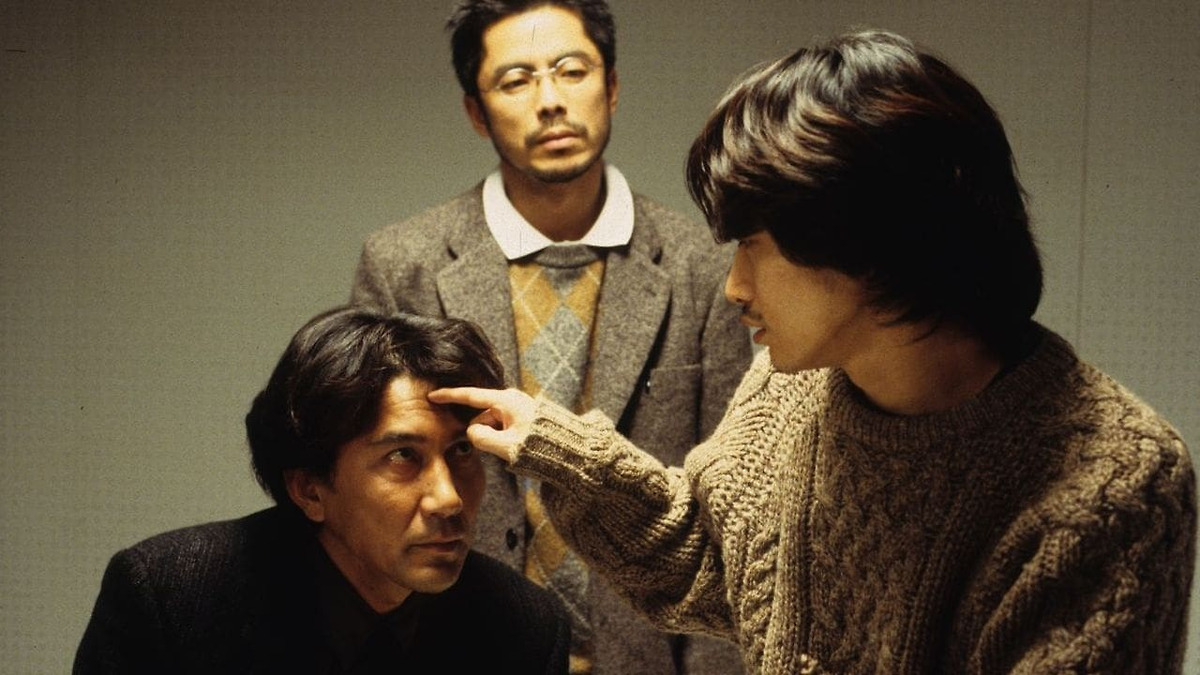
What if the cure to our dissatisfaction in life is to lose any constraint and any inhibition? And what if, if we do that, we simply become brutal killers?
This is the subtly underlying question in Cure, a 1997 psychological horror by Kiyoshi Kurosawa. Detective Kenichi Takabe, played by Kōji Yakusho (the GOAT), is investigating a series of gruesome murders in Tokyo. Every time, the perpetrator is nearby, confesses, but they cannot recollect what happened and why. At some point, Takabe links every murder with an encounter with a young man that claims to suffer from severe amnesia.
This is probably a perfect horror movie. A perfect movie in general perhaps. It is creepy as fuck, it has a chilling soundtrack and does a wonderful work with sounds (I watched it with my headphones and, OMG). But most importantly, it has many different layers of interpretation and little details. I would like to talk about all of them here, but I will spoil it too much. I will only add a little detail on the ending in the spoiler section at the end.
Rebecca (1940)

Rebecca is the first Hitchcock movie after he moved to Hollywood and it is the adaptation of the novel with the same name written by Daphne du Maurier. (By the way, this is the second du Maurier book adapted by Hitchcock, the first being Jamaica Inn). It is considered a masterpiece and it won the Oscar for Best Picture at the 13th Academy Awards.
It is the story of a young woman that falls in love and gets married to the rich widower Maxime de Winter. The young woman, unnamed throughout the film and called only Mrs. de Winter, will soon discover that she must coexist with the burdensome memory of the deceased ex-wife, Rebecca.
The story is more convoluted, as you can imagine, full of mystery and twists, and it is masterfully delivered by Hitchcock. What I’ve found fascinating is how Rebecca is the driving force of the story, even if we never see a single picture of her. She is just a lingering presence, impressing her urgency on every character even after death. This creates a beautiful contrast between the main character (who is alive but unnamed) and Rebecca, who is dead but everybody constantly talks about her.
And then there is Joan Fontaine. What else do you want?
All the Rest
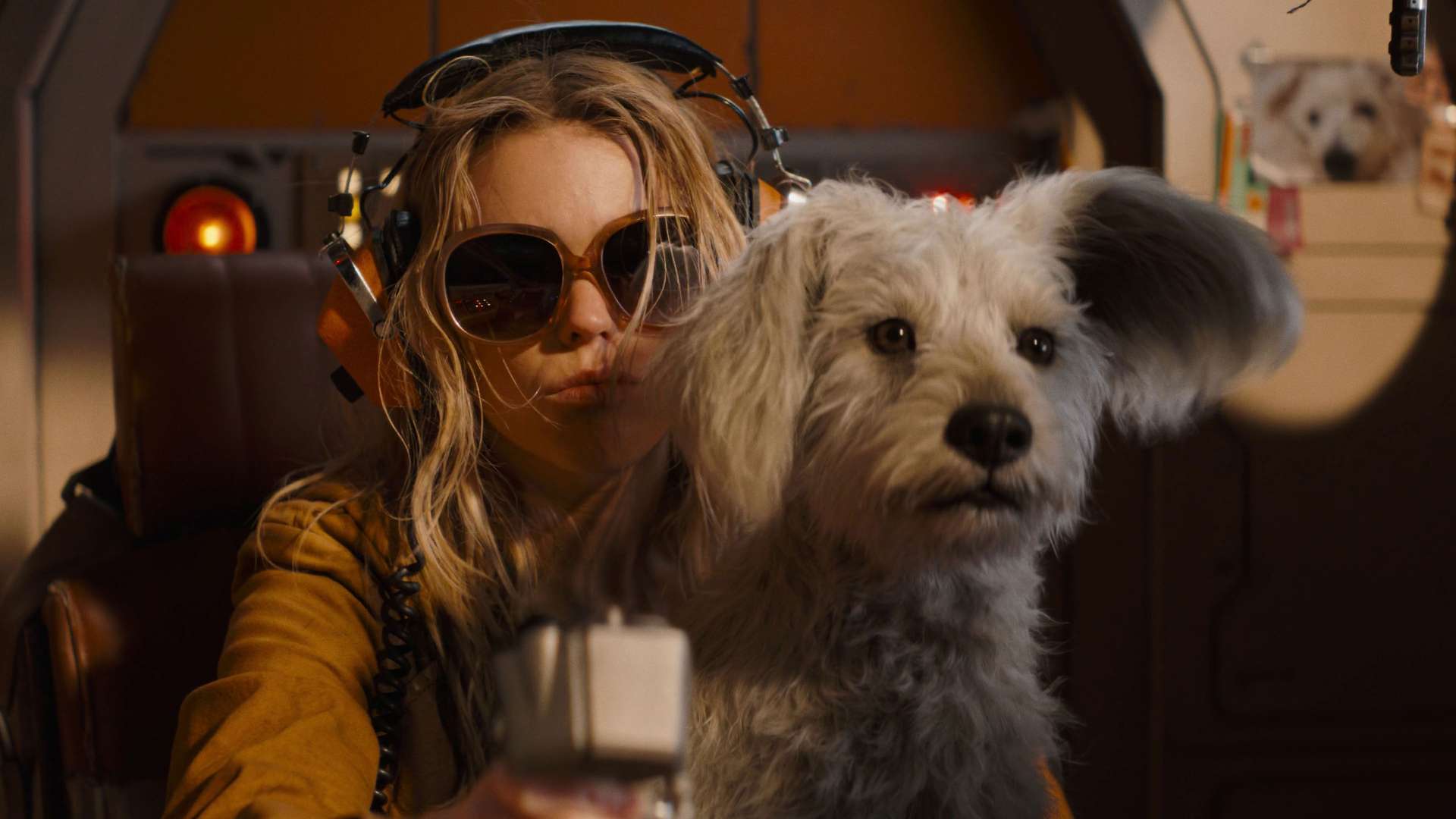
- Jamaica Inn (1939). The last Hitchcock movie in England, it didn’t come out very well.
- The Drama (2026). It really annoyed me that Emma seems to be the only character that acts with some kind of rationality.
- One Battle After Another (2025). Mah. Nothing special. A great disappointment.
- Supergirl (2026). Supergirl is a terrible character in general. Yet, Milly Alcock makes her barely work. Barely.
- Y2K (2024). They took that The Simpsons Treehouse of Horror episode on the millennium bug and made a full movie out of it. It is cringe. A comedy horror that fails both the horror and the comedy parts.
- Foreign Correspondent (1940). The movie is fine. But watching movies about the Second World War, made in the 1940s, always makes me think that they didn’t know how it would have ended. And this adds some special color to the mix.
And then we have the series. Reacher season 4 is over and I liked it as always (with caveats). I also watched the spin-off Neagley, not bad. Star Trek: Strange New Worlds season 4 was disappointing overall. Stuart Fail to Save the World started great, lost focus in the second half, and then maybe recovered at the end. In any case, it is incredible that it works. I watched all Silo episodes but the last one… It got better than I thought, I still despise the flashback. Still, I don’t know why I don’t have the urge to watch the last episode. It is not a problem: there will be less waiting for the cliffhanger.
Music
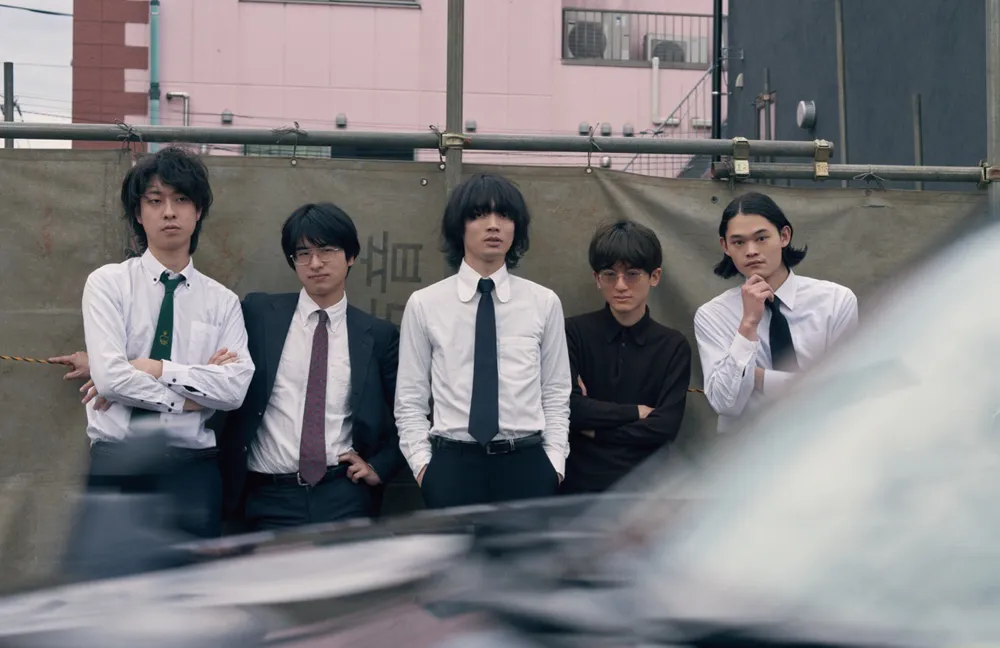
Khaki is a Japanese band formed in 2018 at Waseda University in Tokyo as a Velvet Underground cover band. Then it evolved. Into what? Hard to say. Hiroto Nakashio, the lead singer, described the band’s genre as It’s pop music with a little bit of discomfort. (source).
In reality, I would describe their genre as an almost progressive art rock blended with typical Japanese jazz vibes. But I admit I don’t know them much, I just fell in love with their latest EP, 原子 [Genshi].

The title 原子 means atom and in fact, the record talks about the smallest units from which memory and emotional life are constructed: places, sensations, relationships, fragments of language and half-remembered images.
This short EP, just 28 minutes and 28 seconds, is a little gem, packed with banger after banger and, undoubtedly, my album of the month.
Gaming
I don’t have much to say here except that I got Control Resonant. But it’s too early to comment, so you’ll have to wait until next month. :)
Other Interesting Things
I have a bunch of interesting stuff, this month.
- Any Human Ever: one life from over 100 billion – This is a super cool website that allows you to randomly pick a life among all the humans ever existed. You randomly pick a date, a location, and then it statistically builds a life based on historical data we have. So do not be surprised if many of your lives end in childhood. It is a fun way to spend some time and learn something, but also a humbling experience to remember how lucky we are to be alive today.
- Wiki Time Machine – This is another great visualization. You can choose any Wikipedia page and watch a “replay” of every edit since its inception. It is really entertaining even if watching the replay of SARS-CoV-2, for instance, is a kind of horror movie.
- Lonelog – I stumbled over this shorthand notation for logging soloRPG sessions. I need to dive into it more, but given my recent interest in soloRPGs, I had to share it with you.
Conclusions
I feel like I failed September, so I plan not to do the same with the best month of the year: October. I have a stack of horror movies to watch, a billion books to read, a cupboard full of tea, and far too many board games and RPGs to play. And the volleyball championship is starting again! I’m ready!
I wish you a happy and creepy October! 🎃
See you next month!
Spoiler Sections
- Did you notice at the end of Cure that the waitress took a knife before going to the kitchen? This was the subject of much debate. Did Takabe hypnotize her, continuing the Mesmer cult? Or did she just take a knife because she was a waitress? Well, the truth is that Kurosawa filmed what happened next: the waitress goes to the kitchen and stabs the restaurant manager. However, during the editing, Kurosawa thought that it was much better to let the audience fill in the continuation, and he cut the scene from the final edit. I have to say it: well done, Mr. Kurosawa.